We won the top award at AV-Comparatives, a leading European test lab, after outscoring 14 competitors across a series of rigorous tests.
Our win comes from exceptional results in categories including malware detection, targeted attack prevention, and impact on system performance.
Buy with confidence
At Kaspersky, we’re confident your new plan will protect you from every kind of online threat, so we’re offering you a 30-day money-back guarantee.
If you’re not satisfied with your new plan, just let us know and you’ll receive a full refund.
Meet the new Kaspersky
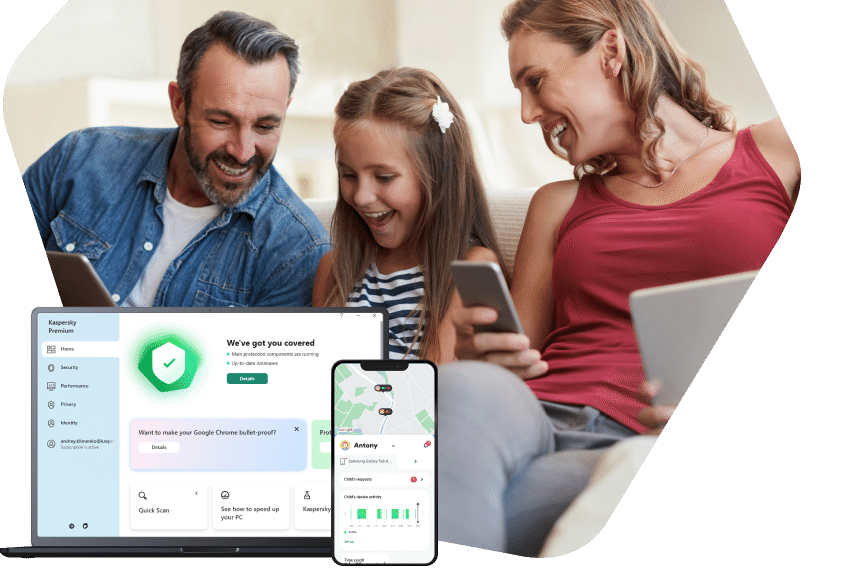
Whether you want to protect your kids, your gaming sessions, or your online banking, the new Kaspersky keeps every aspect of your digital life completely safe and secure.
Complete protection
Blocks everything from malware and viruses, to ransomware and spy apps – so you know you’re always fully protected.
Complete control
Want to keep passwords, content, and activity private? Our VPN, Password Manager, and other tools keep you in control.
Complete performance
Enjoy everything from online shopping to gaming while your computer stays running smoothly – without interruptions.
Most tested. Most awarded.
Over the last year, Kaspersky products appeared in 100 independent comparative tests - winning 93 first-place awards.
Top Rated Product
Absolute Threat Protection
Advanced Threat Protection
Absolute Android Protection
What our customers say
I went with Kaspersky because I heard it would be light on my resources. I thought I might sacrifice some protection – but this was not the case!
I went with Kaspersky because I heard it would be light on my resources. I thought I might sacrifice some protection – but this was not the case!
5 out of 5 stars
Phillip
I feel like I get just as much if not more protection than any competitors offer. All while running very quietly in the background.
I feel like I get just as much if not more protection than any competitors offer. All while running very quietly in the background.
4 out of 5 stars
Alkirk
A great product for everyone, Kaspersky is easy to use and gives you all-round protection. I like the straightforward way it carries out updates and fixes errors.
A great product for everyone, Kaspersky is easy to use and gives you all-round protection. I like the straightforward way it carries out updates and fixes errors.
4 out of 5 stars
Bernie
My husband and I have used Kaspersky for a couple of years now. We are both big-time gamers and this is the only product we've found that doesn't mess with our World of Warcraft play. It’s the absolute best!
My husband and I have used Kaspersky for a couple of years now. We are both big-time gamers and this is the only product we've found that doesn't mess with our World of Warcraft play. It’s the absolute best!
4 out of 5 stars
Kandee733
As a senior citizen, scams are a part of our everyday life. I've used Kaspersky Protection for many years and will continue to cover myself and my Family with this beneficial service.
As a senior citizen, scams are a part of our everyday life. I've used Kaspersky Protection for many years and will continue to cover myself and my Family with this beneficial service.
5 out of 5 stars
Community A.
Tried other products and always went back to Kaspersky. Solid products, lightweight, intuitive UI. Have it on multiple devices in my family, including teenagers, and never had any systems compromised.
Tried other products and always went back to Kaspersky. Solid products, lightweight, intuitive UI. Have it on multiple devices in my family, including teenagers, and never had any systems compromised.
4 out of 5 stars
RCanuck
Kaspersky PremiumTotal Security
Choose our most complete protection
Protect your digital life on our ultimate security plan. Enjoy award-winning antivirus, privacy, and identity protection – all while boosting device performance. Also includes Fast, Unlimited VPN, Password Manager, Remote IT Support, and more.