scam

Black Friday is just around the corner — that time of year when a refrigerator that normally sells for $599.99 suddenly becomes a refrigerator that sells for “just $749.99 $599.99!”, online stores start writing in ALL CAPS, and every other website has a countdown timer that somehow knows that in exactly 14 minutes and 37 seconds, your life without a new vacuum cleaner will lose all meaning.
Kaspersky experts have looked at how cybercriminals exploit the Black Friday frenzy to steal users’ money and data. Today, we’re taking a look at this year’s most common scams. You can read the full report on Securelist.
A discount in name only
Let’s start with a classic: fake discounts. In the run-up to Black Friday, crafty sellers raise their prices so they can pass off the regular price as a discounted one. So that refrigerator that’s always cost $599.99 goes on sale on Black Friday for… $599.99. How generous!
Some stores and sellers care so little about their reputation that they simply pass off their regular prices as discounted ones without even raising them beforehand. These “discounts” may come with bold claims like “TODAY ONLY!”, “exclusive offer”, “hurry before it’s gone”, or “only one left in stock”. As you can probably guess, these claims usually have nothing to do with reality — they’re simply designed to trigger shoppers’ FOMO.
These tricks are as old as the hills, but fortunately, checking whether a store is being honest is easy in this case: just enter the product page URL into the Internet Archive and compare prices in the available snapshots from the past few months. If there aren’t any snapshots, try one of the many price history services.
It’s also worth comparing the price of the same product at other stores. This is where AI can come in handy, along with the useful prompts from our post Hacking Black Friday: using LLMs to save on the “sale of the year”.
How to tell scammers from legitimate sellers
If crafty sellers were all we had to worry about, we’d just compare prices and live happily ever after. Unfortunately, Black Friday is that time of year when scams and phishing schemes traditionally surge.
Scam websites are pretty straightforward: the prices are suspiciously low, and shoppers either never receive their orders or end up getting something completely different from what they expected. Phishing sites, on the other hand, impersonate well-known retailers and brands, but their goal is to get their hands not only on your money but also on your sensitive information: your name, address, phone number, payment card details, email address, and much, much more. Cybercriminals use the stolen data both to steal money and to launch follow-up attacks. For example, they might send you a message supposedly from a delivery service (“Your item failed inspection; you’ll need to request a refund”, “Confirm your delivery address”) or even try to impersonate employees of your bank.
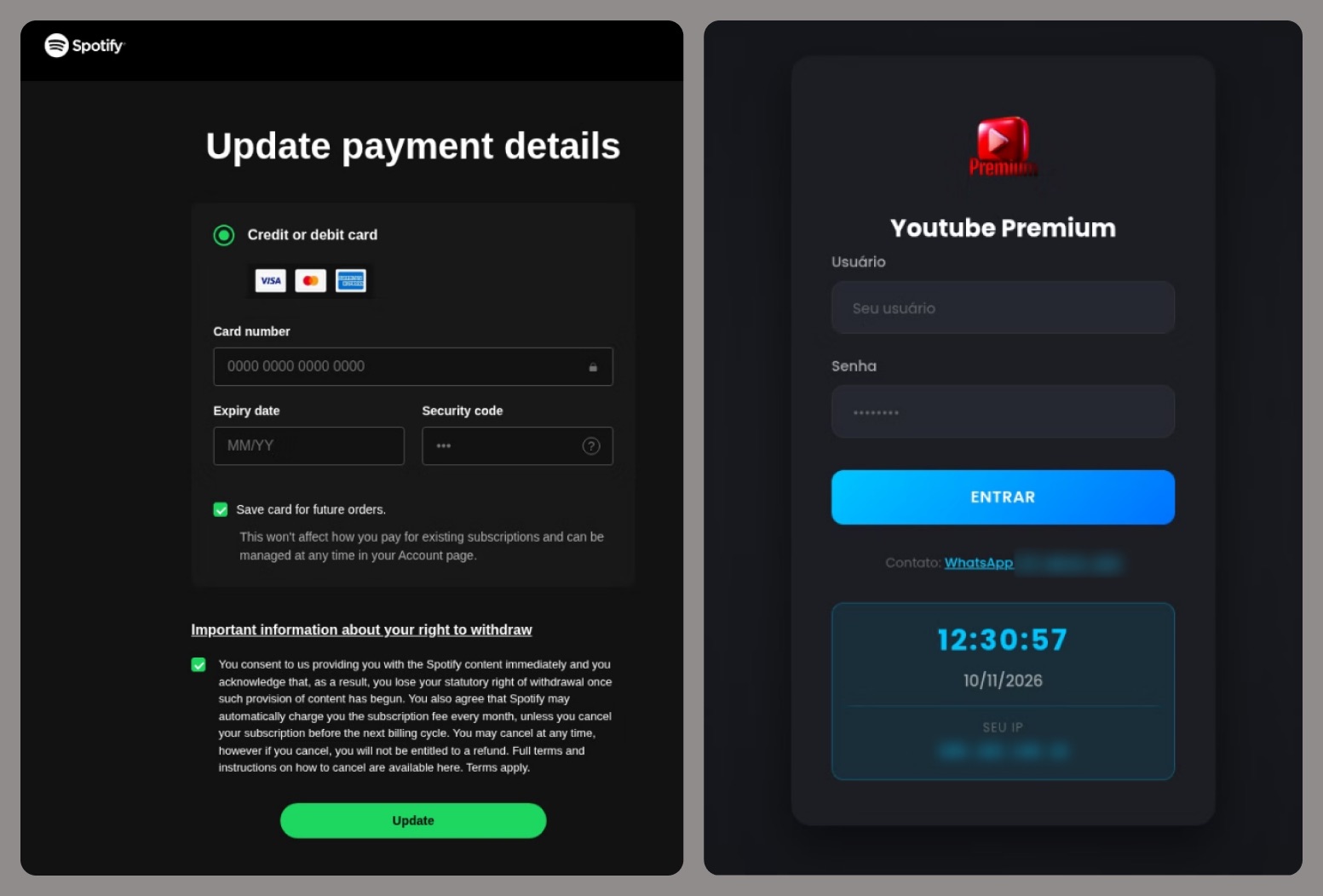
Scammers impersonate Spotify and YouTube Premium to steal payment details and account credentials
Some phishing sites go even further, trying to trick users into downloading malware disguised as a retailer’s app, a discount coupon, an “order confirmation” file, or a browser update. A shopping trip gone wrong could leave you not only out of pocket but also with malware on your device.
With AI, cybercriminals can create hundreds or even thousands of these sites, making minor changes to the website address — for example, amazzon instead of amazon. The site’s design, meanwhile, can look virtually identical to the original.
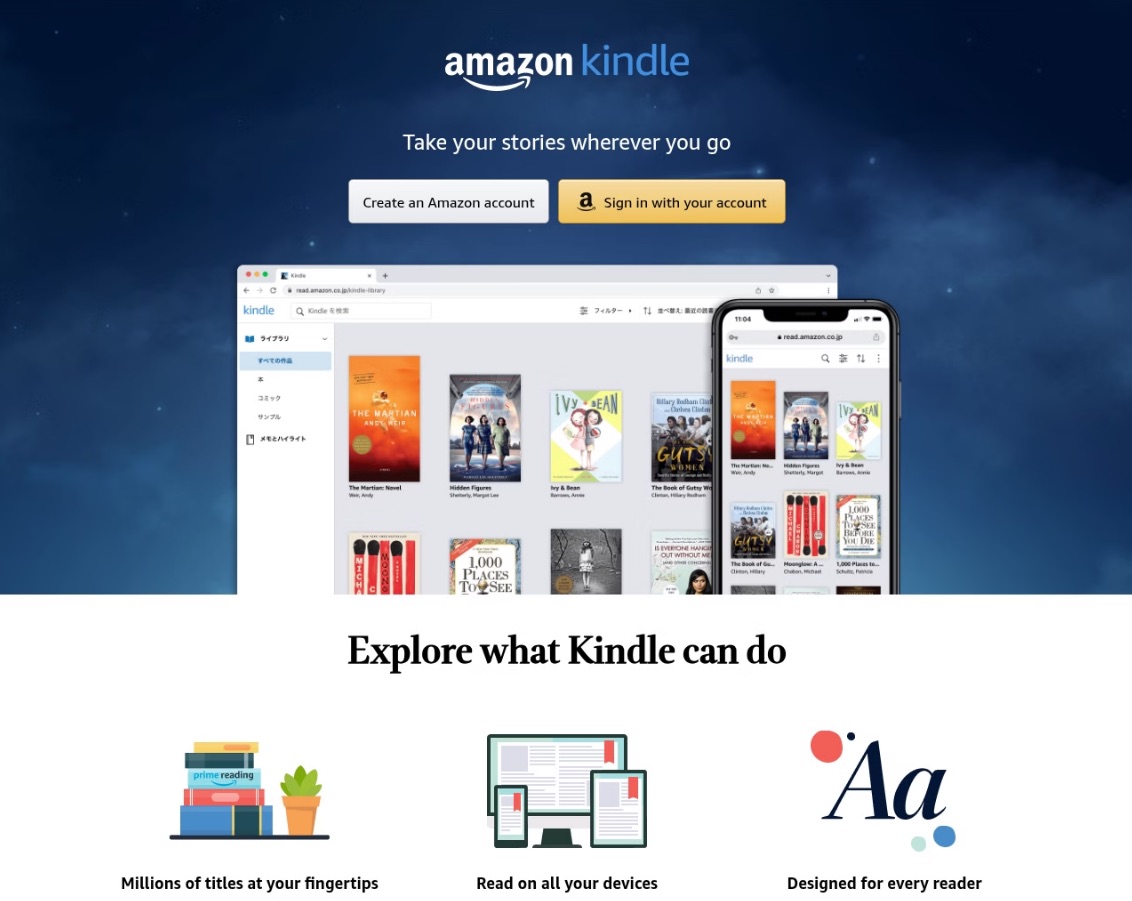
Scammers often copy the fonts and design of legitimate stores. Above is an example of a fake Amazon page
Here’s a checklist to help you vet a store before making a purchase and protect yourself from scams:
- Check when the domain was registered. If the online store has only been around for a few months or even days, that’s a major red flag that you might’ve stumbled across a scam.
- Take a close look at the prices. Even the most generous discounts have their limits. If you’re being offered goods for next to nothing, someone’s probably trying to scam you.
- Look for the store’s registered address — a missing address or an unusual location should raise suspicions.
- Read the reviews carefully. Remember, a lack of negative reviews doesn’t guarantee that a store is trustworthy: sellers sometimes artificially inflate their ratings. Still, it’s worth looking — a single negative review might help you make the right decision.
- Check the website you’re on. If the online store doesn’t use HTTPS or your browser warns you about a potential threat, don’t buy anything there.
- To avoid falling for scammers’ tricks, use Kaspersky Premium. Our security solution detects fake domains and scam websites, blocks access to suspicious sites, and prevents malicious downloads. By the way, Kaspersky Premium also works with email, alerting you to phishing and spam. And from Black Friday until New Year’s, you can get an introductionary offer — for real, we promise!
AI scams: how to avoid buying AI-generated products
You might’ve seen one of the many viral videos in which a well-known clothing brand supposedly unveils adorable hoodies with a special pocket for pets. We hate to break it to you, but most of these videos are AI-generated, and the brand has never sold any such hoodies.
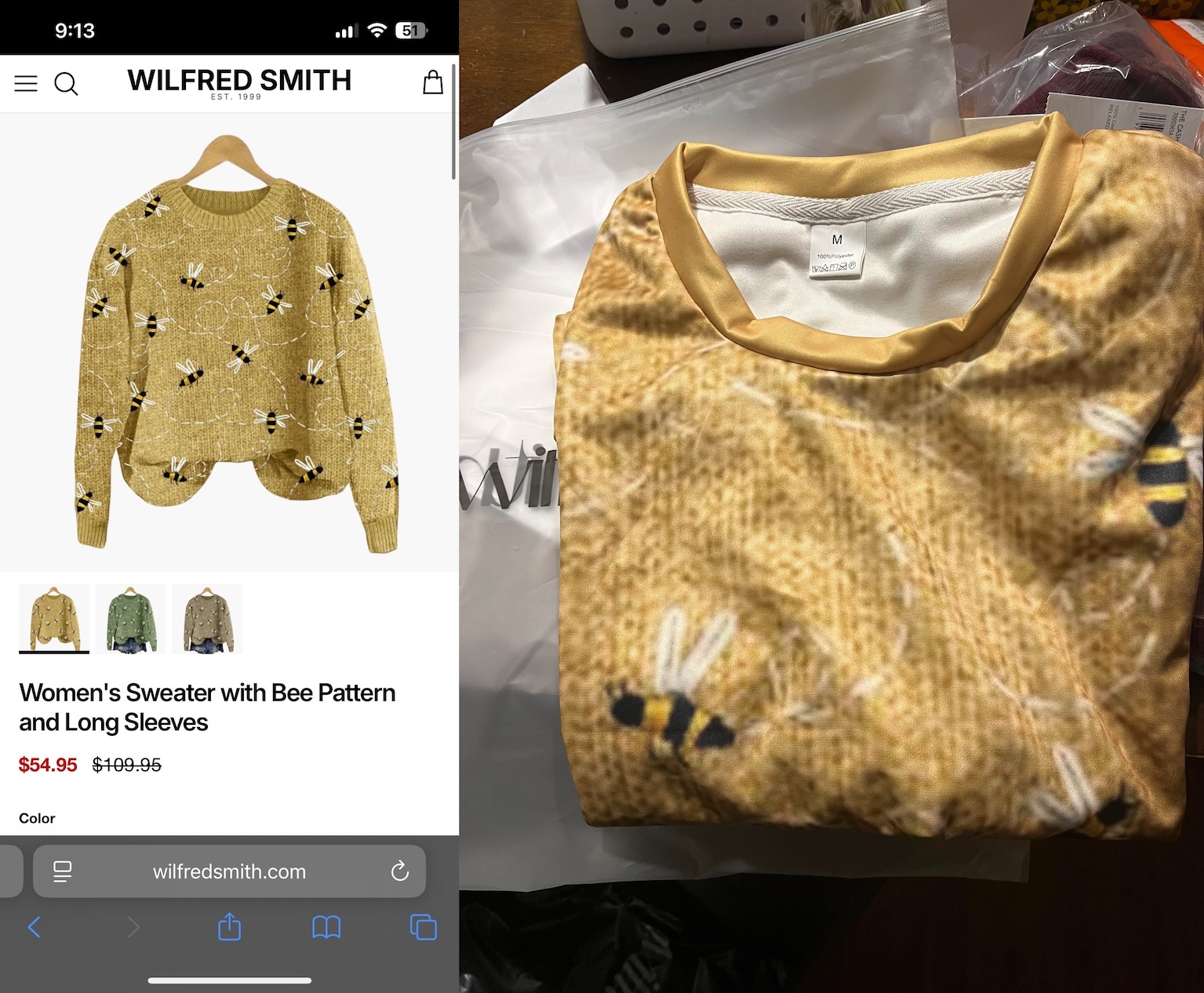
Over the past few years, savvy scammers have been making money selling products that don’t exist. These days, it’s easy to generate a convincing video of someone trying on nonexistent clothes or reviewing a made-up product. People who order these AI-generated products usually either receive nothing at all or end up with something completely different from what they expected: entirely different items, poor-quality knockoffs, or even… printed photos and miniature versions of the products they bought. And no, we’re not kidding!
-

- Expectation vs. reality: instead of a Christmas decoration, a Reddit user received an image of it printed on a piece of fabric. Source

-
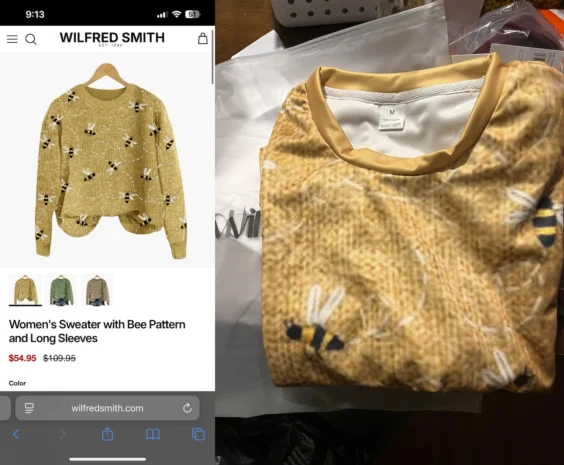
- And here, instead of the promised knitted sweater, the shopper received a cheap polyester T-shirt with a sweater printed on it. For $55, no less! Source
These products are mostly advertised on social media and live shopping (live commerce) platforms. Before you follow a link in the description or copy a product code from the comments, check who posted the video: is it a well-known brand? What information can you find about it online — does it have a registered address or an official website? Where exactly is the product being sold?
Don’t trust every influencer you come across, especially if their bio says something like “UGC creator” (user-generated content creator). These creators make money producing promotional content for brands, and a glowing review doesn’t necessarily mean you’ll receive a genuine, high-quality product.
What’s more, some “influencers” are actually entirely AI-generated, and they look pretty realistic. Many platforms actually require AI-generated content to be labeled, but creators don’t always follow the rules. It’s also worth checking when the supposed influencer’s account was created — scam accounts tend to pop up out of nowhere and don’t last long.
But what if you can’t find anything conclusive about the influencer or store? Then it’s time to take a closer look at the product ad itself. Watch out for these red flags:
- the product or background looks unrealistic;
- unusual highlights and shadows typical of AI-generated content;
- people in the video or photo look unnatural, have the wrong number of fingers, or their jewelry, clothing details, and other small features keep changing;
- the product itself looks “perfect”, has an unusual structure, or features a fantastical design you’ve never seen anywhere else;
- suspiciously low prices.
You can also try a reverse image search for the product. Take a screenshot and upload it to a search engine — sometimes it turns out that the “exclusive designer sweater” has been circulating online for years in a very different form, or that the seller simply took someone else’s photo and tweaked it a little.
A promo code for 100% off your bank balance
Another less obvious type of scam involves bogus promotions and coupons. And no, we’re not talking about how most promo codes only work on your first order — or don’t work at all.
In the run-up to the holidays and major sales, scammers sell special paid “subscriptions” that supposedly give you access to coupons and promo codes for major retailers. Once you’ve paid, you’re promised regular deliveries of promo codes, coupons, or gift cards by mail — except you either receive nothing or get fake coupons that can’t be redeemed. These services are often offered on well-known online marketplaces.
Sometimes, scammers offering coupons promise an extra discount to anyone who completes their purchase on the scammers’ own website. In one case, a seller was offering drones for around $200 less than usual. The shopper paid by card and even received a tracking number, but the shipment status never updated. The seller then claimed they were waiting for payment confirmation, and before long their phone number was disconnected altogether. The shopper never received the drone.
Finally, you might get an email or message urging you to activate a unique coupon worth an eye-watering amount — today only, of course, and preferably within the next ten minutes. To claim this windfall, all you have to do is follow a link and enter all your sensitive information, including your payment card number. Quite a catch for the criminal!
So, if you want real promo codes on Black Friday, sign up for retailers’ own newsletters, check the offers sections on their official websites, and use well-known deal aggregators. But be wary of “exclusive” promotions from random posts and emails.
A box full of empty promises: mystery box scams
Want to buy a new smartphone for next to nothing? How about a game console?
Another popular lure is “mystery boxes” or “return pallets” supposedly filled with customer returns or surplus warehouse stock. For a small sum, sellers promise a whole box of random goods that could supposedly contain smartphones, laptops, headphones, and other expensive electronics. The catch? The contents are often much less impressive than the ads promise.
Last year, in the run-up to Black Friday, there were discovered more than 2,000 fake online stores offering “Amazon returns”. Scammers registered dozens of similar-looking domains, copied the designs of well-known retailers, and promised expensive electronics for next to nothing — in the end, shoppers never got the goods they’d been promised and simply handed their data over to the cybercriminals.
Some major retailers do have programs for selling returned items, but these offers are usually only available to other businesses, not ordinary consumers.
How to save money on Black Friday without getting scammed
- Don’t focus solely on the size of the discount. Compare prices at different stores and make sure you check how much the product cost before the sale.
- Make sure you’re on the legitimate website. Check how long the site has been around and whether the retailer provides contact details and legal information.
- Go directly to the retailer’s website. If you receive a promotional email or find a promo code for a huge discount on social media, find the brand’s official website through a search engine or open the app you normally use instead of following the link you’ve been sent.
- Don’t fall for AI-generated content. If an item only exists in a single viral video, look for it on the brand’s official website or try a reverse image search. If the product looks odd or just too unusual, trust your instincts!
- Don’t share unnecessary information. A store doesn’t need your card number or home address to give you a discount. And if you have to pay a suspicious fee up front to claim a “gift”, it’s probably no gift at all.
- Use a comprehensive security solution. Even the most attentive shopper might miss an extra letter in a website address or a well-disguised phishing email. Kaspersky Premium detects fake domains and scam websites, warns you about suspicious sites, blocks malicious downloads, and helps identify phishing emails. And right now, thanks to Black Friday and holiday discounts, you’ve got over a month to get it an introductionary offer!
For more on the red flags to watch out for this Black Friday, read our report on Securelist.
And if you want to make the most of Black Friday, check out our post Hacking Black Friday: using LLMs to save on the “sale of the year”. We’ve put together ready-to-use prompts for ChatGPT, Claude, Gemini, and other AI assistants to help you:
- put together a shopping list and stick to your budget;
- check whether a store has really lowered its prices or quietly raised them just before the sale;
- find cheaper alternatives to a product and compare their specifications;
- compare offers from several stores, taking both price and shipping into account;
- analyze reviews and identify recurring product issues;
- tailor your search to stores in your country.