
What is the difference between EDR and antivirus?
The main difference between antivirus and EDR is scope. Antivirus primarily focuses on preventing and removing malware. Endpoint detection and response (EDR) adds continuous monitoring, deeper visibility into endpoint activity, investigation, and response capabilities.
Antivirus can help stop many common threats that small businesses face. EDR gives an IT administrator more context when something suspicious happens. Instead of only identifying a malicious file, EDR can help show details of what happened on the device, how the activity developed, and what action may be needed next.
|
Area |
Antivirus |
EDR |
|
Primary purpose |
Prevent and remove malware |
Detect, investigate, and respond to suspicious endpoint activity |
|
Monitoring |
Primarily threat and malware focused |
Continuous endpoint monitoring |
|
Visibility |
Limited context around detected threats |
Deeper visibility into behaviors and events |
|
Investigation |
Basic |
More detailed investigation and event history |
|
Response |
Blocks, quarantines, or removes threats |
Can support containment, remediation, and response actions |
|
Management requirements |
Generally lower |
Varies by solution, may require additional monitoring and investigation |
- Antivirus focuses mainly on malware prevention and removal. EDR adds continuous monitoring and response.
- The difference is about scope and purpose, not simply signatures versus behavioral detection or AI.
- EDR provides more visibility into what is happening across business endpoints when suspicious activity occurs.
- EDR may require more active monitoring and investigation, although automation can reduce the workload for small IT teams.
- Small businesses should choose protection based on their risk, number of endpoints, IT resources, and need for visibility and response, rather than assuming EDR is automatically the better option.
What is endpoint protection?
Endpoint protection refers to the technologies and security controls used to protect devices such as employee computers and business servers from cyberthreats.
It is a broad concept rather than a single product or detection method. A business endpoint protection strategy can combine multiple capabilities. Antivirus and EDR may both form part of the overall approach.
Endpoint protection is especially important for many small businesses because employees may use several devices to access business data and systems. The aim is to provide effective protection across those endpoints without requiring the complexity or staffing of a large enterprise security environment.
What is antivirus and how does it work?
Antivirus is security technology designed primarily to prevent, detect, block, and remove malware from endpoints such as employee computers and business servers.
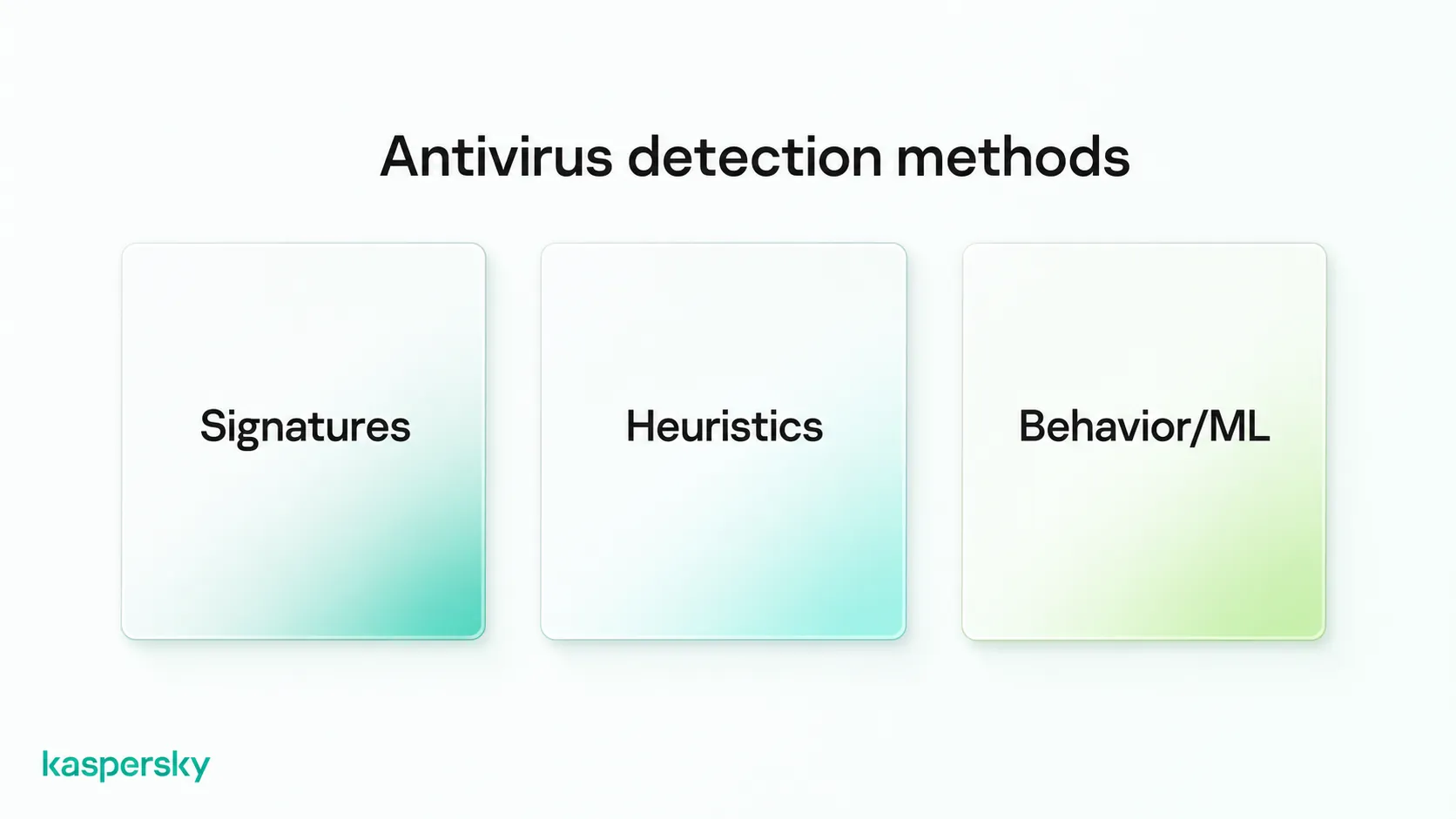
Modern antivirus can use several detection methods. These may include known malware signatures, heuristic analysis, behavioral monitoring, and machine-learning-based techniques. These can identify suspicious files or activity.
Antivirus software may block a malicious download or prevent a harmful file from running. It may also be able to quarantine the file or remove it from the device altogether.
Antivirus is therefore an important preventive layer for businesses. But it is usually one part of a broader endpoint protection strategy rather than the full scope of business security on its own.
What is EDR and how does it work?
Endpoint Detection and Response (EDR) is security technology that continuously monitors activity on endpoints to identify suspicious behavior and support investigation and response to potential threats and security incidents.
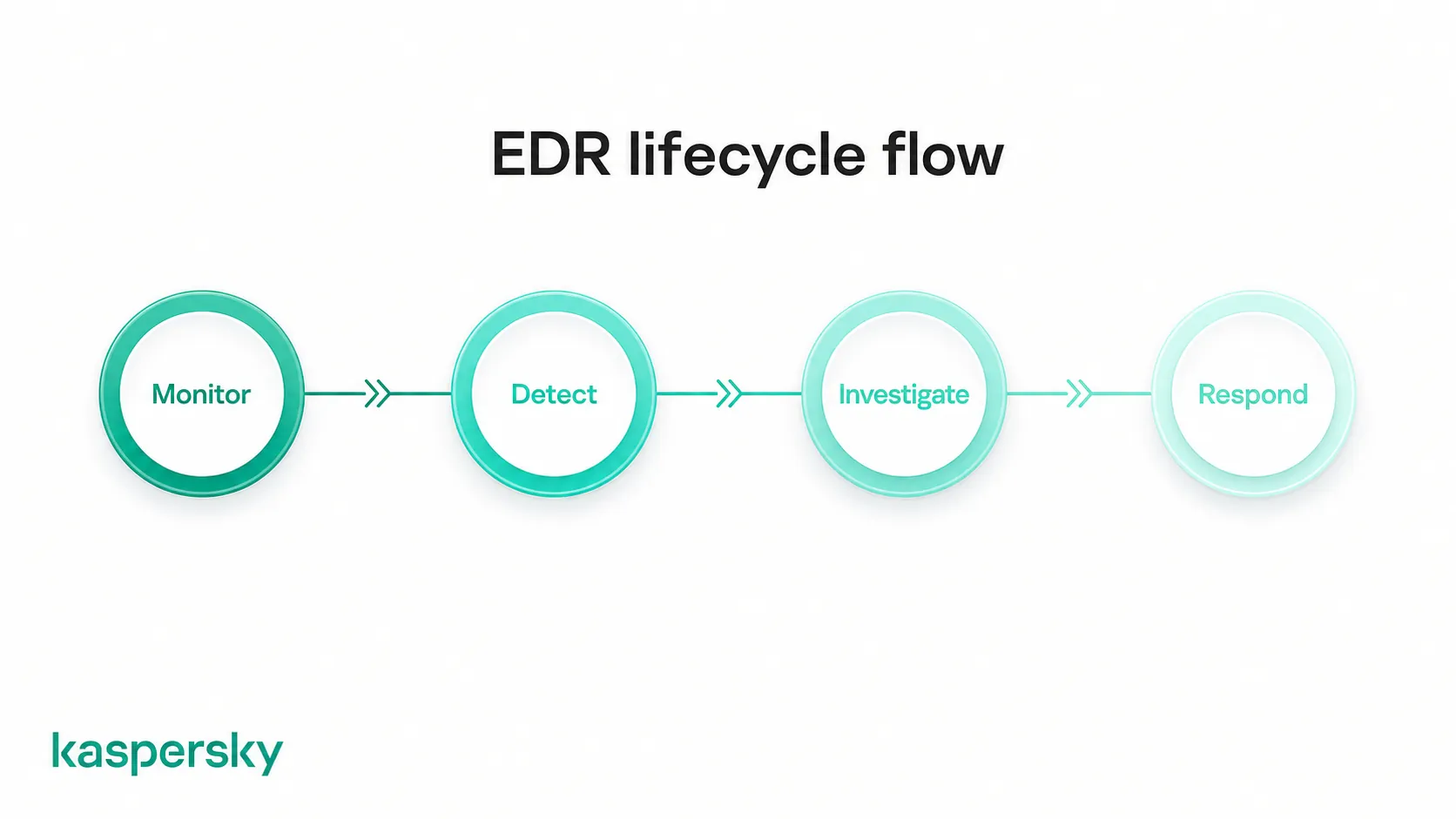
EDR follows a monitor → detect → investigate → respond process. It can observe activity such as running processes, file changes, network connections, and system events. It can use that context to identify behavior that may indicate a threat.
This extra visibility can help an IT administrator understand what happened during an incident and decide what action to take. Some EDR solutions may also use behavioral detection, generate alerts, or automate response actions.
The main value of EDR is that it gives small IT teams more context and control when suspicious activity needs closer investigation.
Does EDR replace antivirus?
Not necessarily. Antivirus and EDR address different parts of endpoint security and are often most effective when used together.
Antivirus primarily helps prevent and remove malware. EDR adds ongoing monitoring and investigation when suspicious activity requires a deeper look.
This reflects the idea of Defense-in-Depth. Many businesses use several complementary layers of security rather than relying on a single technology to stop every type of threat.
Endpoint protection solutions can combine antivirus, EDR, and other security capabilities in one platform. This means small businesses do not always need to deploy and manage them as completely separate tools.
Independently tested and awarded by the industry's leading labs.



What other detection and response options should small businesses know about?
EDR sits within a wider detection-and-response ecosystem. Related technologies and services can provide broader visibility or centralized security monitoring. Small businesses do not necessarily need all of them. The right mix depends on the organization’s risks and available IT resources.
What is XDR?
Extended Detection and Response (XDR) expands beyond endpoints by combining security information from multiple sources. EDR focuses on endpoint activity. XDR can provide broader visibility across different parts of the security environment. Both support detection, investigation, and response, but their scope differs.
What is MDR?
Managed Detection and Response (MDR) is a service in which external security specialists help monitor and respond to threats. EDR mainly refers to technology and capabilities. MDR provides the people and expertise around detection and response. This can help smaller businesses that lack dedicated security staff.
What is a SOC?
A Security Operations Center (SOC) refers to the people and processes responsible for monitoring, investigating, and responding to security incidents. EDR can provide useful endpoint visibility to a SOC. Using EDR does not mean a small business needs to build its own security operations center. For many small businesses, operating a dedicated in-house SOC may not be necessary or practical.
What is SIEM?
Security Information and Event Management (SIEM) collects and analyzes security data from multiple systems. SIEM provides centralized visibility across a broader environment, while EDR specializes in endpoint activity and response. The two can complement each other rather than acting as direct alternatives or competing with one another.
How should small businesses choose the right endpoint protection?
The right level of endpoint protection depends on a business's security needs and IT resources. It is not all about its size. A small company handling sensitive customer data, supporting remote workers, or relying heavily on its IT systems may require more advanced protection than its size alone would suggest.
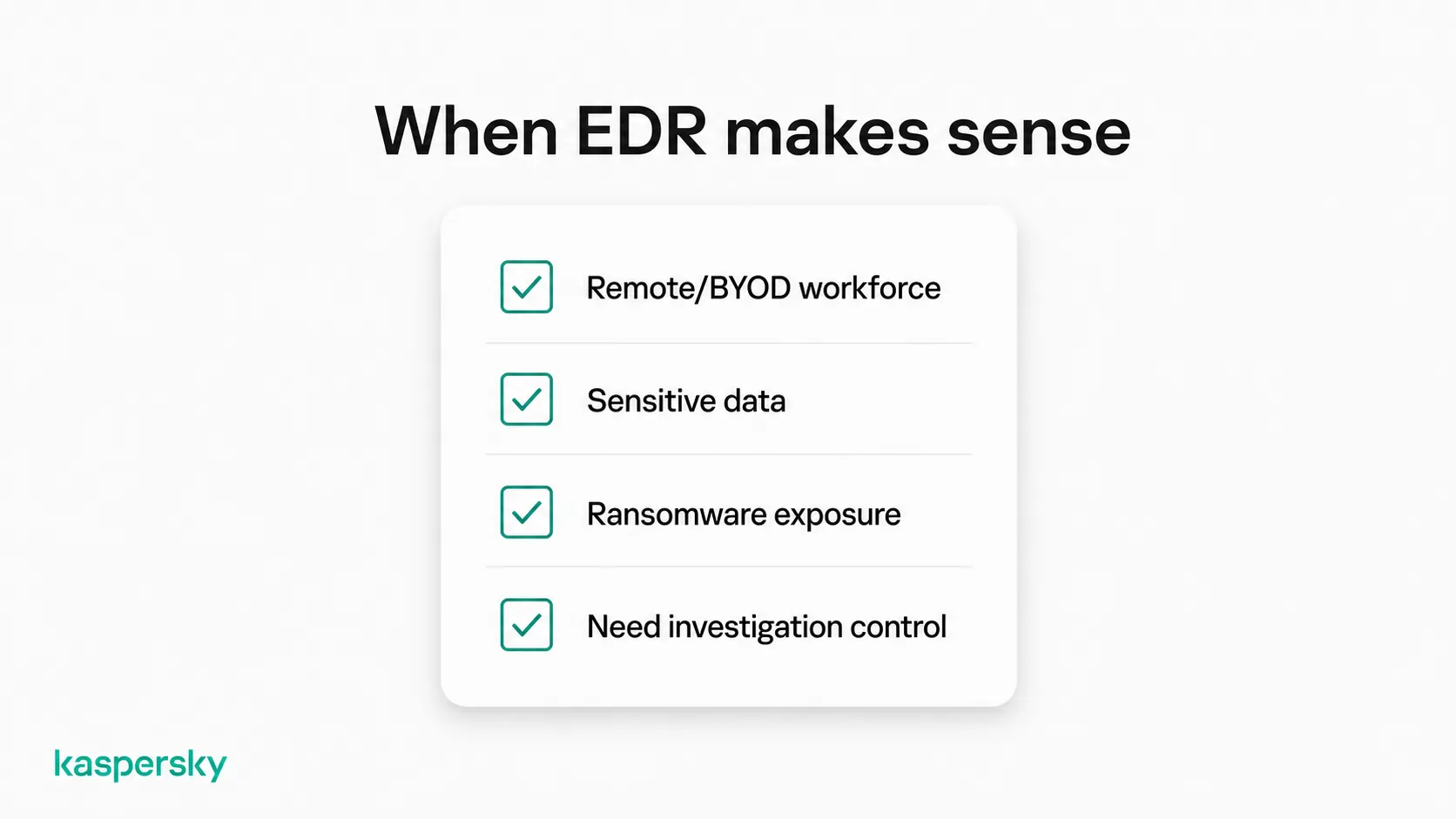
Key factors to consider include:
- The number and types of endpoints that need protection.
- Whether employees work remotely or use devices outside the office.
- The sensitivity of business and customer data.
- Exposure to ransomware and other advanced threats.
- The potential cost of downtime or a security incident.
- The amount of time and expertise available to manage security.
Strong preventive protection may be enough to deal with common malware and routine threats for some businesses. Others may benefit from EDR capabilities that provide deeper visibility, root-cause analysis, investigation tools, and more control over how incidents are contained and resolved.
Small businesses may have one IT administrator or a small IT team. This means that usability matters just as much as technical capability. Look for protection that is easy to deploy and able to automate routine detection and response where possible. This can help avoid creating an unmanageable volume of alerts or administrative work.
More advanced endpoint protection does not have to mean building an enterprise-scale security environment. The goal is to find the right balance between prevention, visibility, response, and operational complexity for the way the business actually works.
Related Articles:
- What are the benefits of Endpoint detection and response in cybersecurity?
- What is XDR and how does it differ from EDR?
- What is endpoint security and why is it important?
- Learn more about Why businesses need antivirus
Related Products:
FAQs
Is EDR better than antivirus?
Not necessarily. Antivirus focuses mainly on preventing and removing malware, while EDR adds continuous monitoring, investigation, and response. The better choice depends on the business’s risks and security needs.
What should a small business look for in an EDR solution?
Look for easy deployment, centralized management, useful automation, clear alerts, and response tools that a small IT team can realistically manage.
Can small businesses use EDR without a dedicated security team?
Yes. Small businesses can use EDR without a dedicated SOC or large security team, especially when the solution is designed to simplify monitoring and automate routine response tasks.
What is the difference between endpoint protection and endpoint security?
The terms are often used interchangeably. Endpoint security is the broader practice of securing devices, while endpoint protection usually refers to the technologies and controls used to protect those endpoints.